A pre-shipment inspection is most useful when the buyer has defined what will be checked, which lot is eligible, how samples are selected, what constitutes an acceptable result, and who decides whether to release the goods. Planning those points before production is finished leaves time to resolve discrepancies, arrange rework or re-inspection, and coordinate dispatch against the order rather than improvising under shipping pressure.
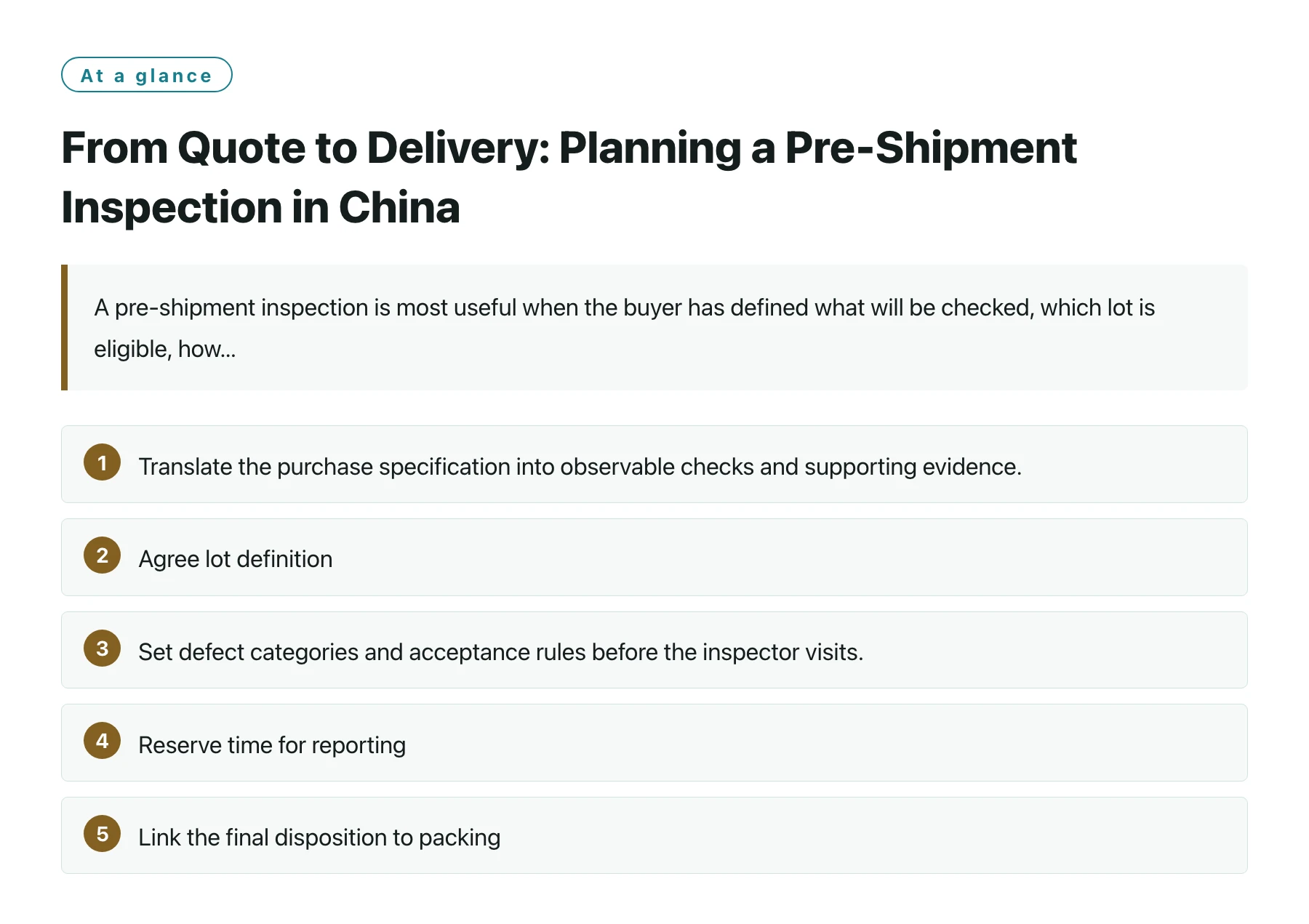
Key takeawaysTranslate the purchase specification into observable checks and supporting evidence. · Agree lot definition, readiness conditions, sample selection, and inspection timing. · Set defect categories and acceptance rules before the inspector visits. · Reserve time for reporting, clarification, corrective action, and repeat checks if needed. · Link the final disposition to packing, documents, logistics, and an authorized release decision.
Inspection is one checkpoint in the order lifecycle. Its value depends on matching scope and method to the buyer’s actual decision.
Turn the quotation into an inspection brief
Begin with the final quotation, purchase order, approved product specification, drawings, sample record, and any agreed deviations. Identify model, revision, materials, accessories, quantity, variants, packaging, and destination. Convert each material requirement into a check that an inspector can perform or a document that can be reviewed. “Good workmanship” needs examples or criteria; a drawing tolerance needs a measurement point and method.
Group checks by product identity, quantity, appearance, dimensions, function, labeling, accessories, packaging, and required records. Select checks based on product risk and how the buyer will use the information. A visual inspection cannot establish internal composition or long-term durability, while a lab test may not verify carton count or correct labels. If a characteristic needs specialist equipment or testing, arrange it separately and name the responsible party.
Buyers can discuss JS Sourcing as part of inspection planning. Keep the instruction specific: what goods are being inspected, where they are, when they will be ready, which documents should be available, who grants access, and whom the inspector contacts if production or packing is incomplete.
Define the lot and readiness conditions
State what counts as the inspection lot: order, model, production batch, color, size, factory, or other traceable group. If the order contains materially different configurations, decide whether they should be inspected as separate lots. Confirm the finished quantity and packing status before travel. An inspector should not be asked to treat unfinished or mixed production as a completed lot without recording that limitation.
Set readiness conditions in advance. These may include completion of a specified portion of production, availability of all variants, final packaging materials, approved labels, and access to purchase documents. The appropriate condition depends on the order and inspection purpose. If the visit occurs before all goods are ready, agree how the report will distinguish examined items from goods not available.
Coordinate the supplier and inspector on site access, safety rules, working hours, sample selection area, handling equipment, and photography permissions. Identify language support and escalation contacts. A short readiness confirmation before the visit can prevent an inspector from arriving while cartons are still being assembled or the reference sample is unavailable.
Choose a sampling and decision method
Agree whether the inspection is a full check, a defined sample, a targeted risk sample, a document review, or a combination. If using acceptance sampling, specify the method, inspection level, sample size, classification rules, and acceptance and rejection criteria before the visit. ISO 2859-1:2026 describes acceptance-sampling schemes by attributes indexed by AQL for lot-by-lot inspection; selecting and applying a plan requires the relevant standard and agreed context, not an improvised label. [1]
AQL is not a promise that a particular percentage of a lot is defect-free, nor does an inspection sample prove the quality of every unexamined unit. Make sure decision-makers understand what the sampling plan does and does not establish. The buyer’s quality professional should select an appropriate plan based on product risks, order history, and contractual needs. If the parties use another method, describe it in plain language.
Distinguish critical safety or regulatory concerns from major functional or fit issues and minor appearance findings only where the contract defines those categories. Provide concrete examples and the applicable criteria. Avoid leaving the inspector to decide commercial tolerance in the field. The report should record observed facts and counts; authorized buyer representatives should make disposition decisions.
Plan the schedule from cargo handoff backwards
Work backwards from the planned dispatch date. Include supplier readiness confirmation, travel or site access, inspection time, report preparation, buyer review, question resolution, corrective action, rework, re-inspection, packing, export documents, booking, and carrier handoff. The buffer needed depends on order complexity and route. If a schedule leaves no time to act on a finding, the inspection may become a recordkeeping exercise rather than a useful release checkpoint.
Name milestones and owners: production completion, final pack-out, inspection booking, report due date, buyer disposition, shipping instruction, and document handover. Tell the supplier what happens if the lot is not ready or a required document is missing. Decide whether the booking is postponed, limited in scope, or performed with an exception noted. Record any resulting effect on cost or delivery date.
Clarify whether the inspection occurs before final packing, after packing, or across both stages. If cartons are selected and opened, plan resealing and identification. If packaging must be checked, define the number of cartons, packaging features, labels, marks, and closure methods in scope. Align the sequence with the factory’s actual production flow.
Prepare references and tools
Provide the inspector with the current controlled specification, order, approved sample or reference photos, artwork, test requirements, and any approved deviation. Mark document revisions and identify the source of truth. If a sample is shipped to the inspector, label it and retain evidence of its condition. Avoid conflicting instructions in email threads by issuing a single inspection brief that captures current decisions.
Identify measuring instruments or test equipment needed for the agreed checks. Decide who supplies them, what resolution or calibration evidence is required, and how measurements will be recorded. For a simple visual or functional check, specify the test conditions and pass criteria. For specialist or destructive tests, arrange qualified facilities and determine sample custody before production is finished.
Ask the inspector to capture enough evidence to support the report: overall images, close-ups of deviations, measurements, package labels, carton counts, and document references where relevant. Explain confidentiality or photography restrictions. Evidence should identify the model and location so reviewers can connect it to the lot rather than seeing an unlabeled image with no context.
Specify how results and exceptions are reported
Request a report structure with scope, site, date, lot quantity, sample method, sample size, checklist, results, findings, photographs, documents reviewed, limitations, and overall status. Require the report to distinguish an actual defect from a note, an item not checked, or an unavailable record. The summary should be traceable to detailed evidence and the agreed decision rules.
Set a route for questions and supplemental evidence. The inspector should flag a mismatch between instructions and the goods, but should not silently redefine the scope. Name the person who can authorize a changed sample, additional measurement, or limited inspection. If an important fact cannot be verified at the visit, the report should say so clearly and identify what follow-up is required.
When reviewing the report, reconcile findings with the product revision, sample, specifications, quantity, and purchase order. Ask focused questions about unclear counts, photos, methods, or conclusions. Preserve the original report and any corrected or supplemental version so internal teams can see how the release basis changed.
Agree corrective action and re-inspection rules
Before production, decide how nonconforming goods are handled: segregation, repair, replacement, concession, or hold. Name who proposes corrective action, who approves it, what record confirms completion, and whether affected units must be re-inspected. A supplier statement that work is complete should be supported by evidence when the issue could affect function, safety, contract requirements, or shipment acceptance.
If a re-inspection is needed, define its scope and timing. It may cover corrected items, the full affected lot, packaging changes, or selected documentation. Keep the original finding linked to the follow-up report. Record whether the corrective action addresses only the observed units or a process issue that may affect other items.
Do not let a passed follow-up erase the history of a material deviation. The buyer should retain the finding, the action, and the final disposition. This helps identify recurring patterns and informs future supplier controls without assuming a single event describes every order.
Make release a separate, recorded decision
After the inspection, confirm the authorized buyer representative has reviewed the report and open items. Record release, conditional release, hold, rework, or other disposition against the affected lot and quantity. If a deviation is accepted, document who approved it, for which units, and under what commercial or technical conditions. The inspector’s report is an input; the purchase agreement and buyer’s release authority govern the decision.
Before dispatch, reconcile the approved product revision, inspection disposition, carton count, labels, packing list, invoice, certificates or declarations required for the order, and transport booking. Confirm that no unapproved substitution occurred after the visit and that packaging changes did not invalidate checked evidence. Tell the logistics contact if a hold remains.
After delivery, compare receiving results, damage, shortages, and customer feedback with the inspection scope. If an issue escaped detection, consider whether the checklist, sample method, timing, supplier process, or packaging review should change. Treat the review as an improvement input, not a claim that any one inspection method eliminates all risk.
Sources
Frequently asked questions
When should a pre-shipment inspection be scheduled?
After the agreed lot and required variants are ready for the inspection scope, with enough time afterward for report review, corrective action, and release before dispatch.
Does an AQL sample certify every unit in a shipment?
No. It is a sampling decision method for a defined lot and plan. It provides evidence from selected units under stated rules, not a unit-by-unit guarantee.
Who decides whether goods can ship after an inspection?
The buyer’s authorized release owner decides using the report, contract, open findings, and applicable requirements. The report records the inspection evidence.
What should happen if the factory is not ready on the inspection date?
Follow the agreed readiness and rescheduling process. If any partial check proceeds, document what was available and what remains outside the inspection scope.