How to Brief Eye Cream Actives Without Overloading the Formula
An eye cream brief should assign one job to each active and leave room for texture, tolerance and packaging. Retinol, peptides, niacinamide and hyaluronic acid can all support a concept, but putting every fashionable name into one sample is not the same as building a coherent product.
Key takeaways
- Start with one primary user outcome and one supporting outcome.
- Review performance, compatibility and market position as separate decisions.
- Ask for evidence at the concentration and in the formula being sampled.
- Keep claims provisional until the relevant test package is available.
What is the first decision in an active brief?
Write the user problem in ordinary language before listing ingredients. Dry-feeling under-eyes, uneven-looking tone and visible fine lines lead to different priorities. A brief that begins with four actives but no user decision asks the laboratory to invent the product strategy.
Name the primary outcome, supporting outcome, preferred texture and use occasion. Morning use may place more weight on makeup compatibility; an evening concept may accept a richer finish. These constraints help the formulator choose a workable system rather than chase a crowded label.
How should the four common actives be assigned?
Yunmei's eye cream guide discusses retinol, peptides, niacinamide and hyaluronic acid. Give each candidate a role. Hyaluronic acid commonly supports hydration positioning, while niacinamide may fit a broader skin-appearance story. Retinol and peptides call for their own performance and compatibility review.
Do not assume a long list means a stronger formula. Every addition affects cost, processing, preservation, sensory feel or evidence needs. The right question is whether the active earns its place in the intended product and remains suitable inside the complete formula.
Where do natural inputs change the evaluation?
When a concept includes natural skincare ingredients, define what the term means for the brand and market before sourcing begins. Botanical origin, processing method and supplier documentation may matter as much as the familiar common name printed on a brief.
Ask for identity, batch consistency, carrier information and storage conditions. Natural variation is not automatically a defect, but it must be understood. A colour or odour shift that is acceptable in a raw extract may be unacceptable in a pale eye cream sold in a clear or lightly tinted pack.
| Active | Possible brief role | Review focus |
|---|---|---|
| Retinol | Visible-ageing concept | Tolerance and stability |
| Peptides | Targeted performance story | Finished-formula evidence |
| Niacinamide | Skin-appearance support | Level and user experience |
| Hyaluronic acid | Hydration positioning | Texture and pilling |
How are compatibility and user experience reviewed?
Assess the whole formula at the intended dose. Record spread, drag, absorption time, residue, pilling and interaction with makeup or sunscreen. A promising active cannot compensate for a product that users avoid because one pea-sized application rolls under concealer.
Use coded samples and a fixed waiting time. Immediate feel and ten-minute after-feel are different observations. Include the target package because a narrow nozzle or pump changes dose and can change the panel's experience of richness.
What evidence should travel with the sample?
Request a sample code, dated formula version, ingredient documentation relevant to the claim and the planned test route. Evidence should match the formula version. A supplier brochure about an ingredient is context, not proof that the finished eye cream produces a particular result.
Yunmei states that sensitive-positioning claims need patch-test results and publishes a three-to-six-month window for stability and compatibility reports. Put those gates on the launch calendar before artwork promises are final.
How can the first sample stay focused?
Use a design-of-decisions approach. Round one can compare two textures around the same active direction. Round two can refine fragrance-free sensory feel or dose. Changing the active system, emulsifier, package and claim together makes feedback impossible to interpret.
Give the laboratory ranked feedback with measurements where possible. 'Absorbs in about forty seconds but pills after foundation' is actionable. 'Not premium enough' does not identify a variable the formulator can change and retest.
When is the active roadmap ready for scale?
Freeze the outcome, formula version, target dose, package and evidence plan in one approval record. Then confirm whether the route uses an existing formula or new development. Yunmei publishes four to eight weeks for ODM and three to six months for OEM work.
The roadmap should also name future extensions. A richer night version or fragrance-free option may share a platform, but it should not quietly enter the first product. Protecting scope is one of the fastest ways to protect both schedule and interpretability.
Worked example: narrowing a four-active wish list
Score each active from 1 to 5 on strategic fit, evidence readiness and formula compatibility. If hyaluronic acid scores 5, 4 and 5, its total is 14. If another candidate scores 3, 2 and 2, its total is 7. Keeping the 14-point primary choice and testing the 7-point idea later makes the first sample easier to evaluate.
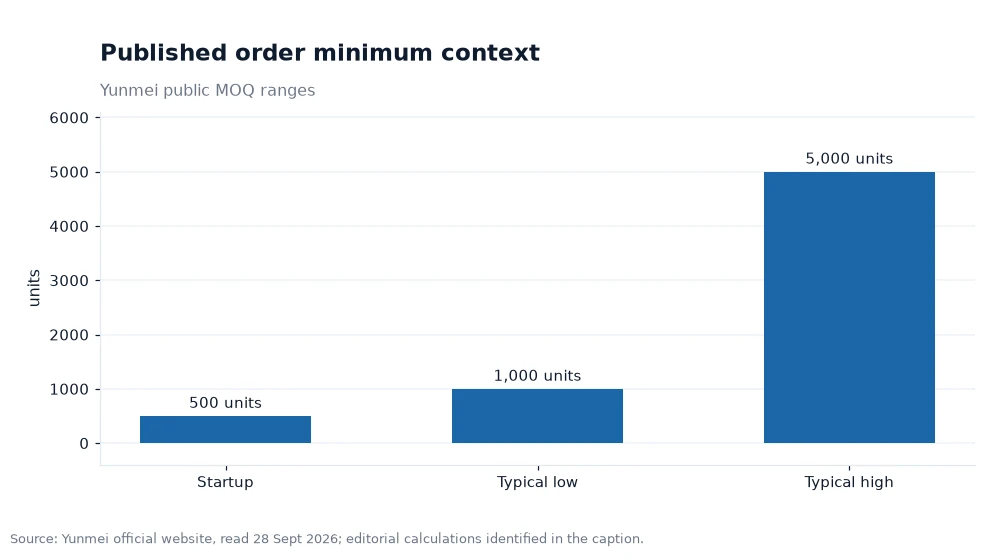
Ingredient ambition has to meet order economics. A focused first formula at 500 or 1,000 units may generate clearer market learning than several active stories spread across a larger first commitment.
Frequently asked questions
Should an eye cream include all four named actives?
Not necessarily. Choose actives for the intended user outcome, formula compatibility and evidence plan. A shorter, coherent system can be easier to test and explain.
What should a sensory panel record?
Record dose, spread, drag, absorption time, residue, pilling and after-feel at fixed time points. Test with the intended package and relevant makeup routine.
When should claims be fixed?
Set a provisional direction in the brief, but release final wording only after the finished formula and relevant evidence have been reviewed together.
Turn ingredient interest into a testable brief
A strong roadmap does not start with the longest label. It starts with a user decision, assigns each active a job and connects that job to a sample method, evidence gate and commercial quantity. The sourcing file should be useful to the next person who inherits the project. Store the supplier identity, the material code, the approved specification and correspondence about any deviation in one controlled location. Add a short note explaining why the ingredient was selected and what would trigger a review. Procurement can then monitor continuity while the laboratory protects formula intent. For a new source, compare samples side by side before a purchase commitment, and define the acceptance method in advance. A clear record also helps the brand avoid turning supplier language into finished-product claims without technical review. Keep the development sample, raw-material record and eventual report cross-referenced by version. Before the project is closed, compare the approved record with the exact item being purchased. Check the version, quantity, component and evidence reference rather than relying on a remembered conversation. Ask the supplier to confirm any open assumption in writing, and save that confirmation with the quotation. If an answer changes the brief, update the sample and calendar before releasing the next commitment. This final reconciliation gives the brand a clear basis for later questions from production, quality or customer service. It also makes the next order easier to plan because the team can distinguish what was learned from what was merely assumed during the first launch. For cross-functional work, ask regulatory and marketing colleagues to review the proposed ingredient role before the formula is locked. The laboratory can explain technical feasibility, while the brand decides whether the story is distinct and useful. Keep these discussions factual and avoid converting a supplier's description into an efficacy promise. When a candidate is rejected, record whether the reason was supply continuity, sensory impact, documentation or fit with the product concept. Such notes can guide later reformulation and make it easier to revisit the choice if the audience changes. A controlled decision log also helps a new team member understand why a familiar ingredient was not selected simply because it appeared on a trend list. Review Yunmei’s OEM/ODM manufacturing overview and use the same written brief for every sample round.
Ingredient names and factory guidance were checked against Yunmei's website on 28 Sept 2026; supplier-document suggestions and calculations are editorial guidance.[1].